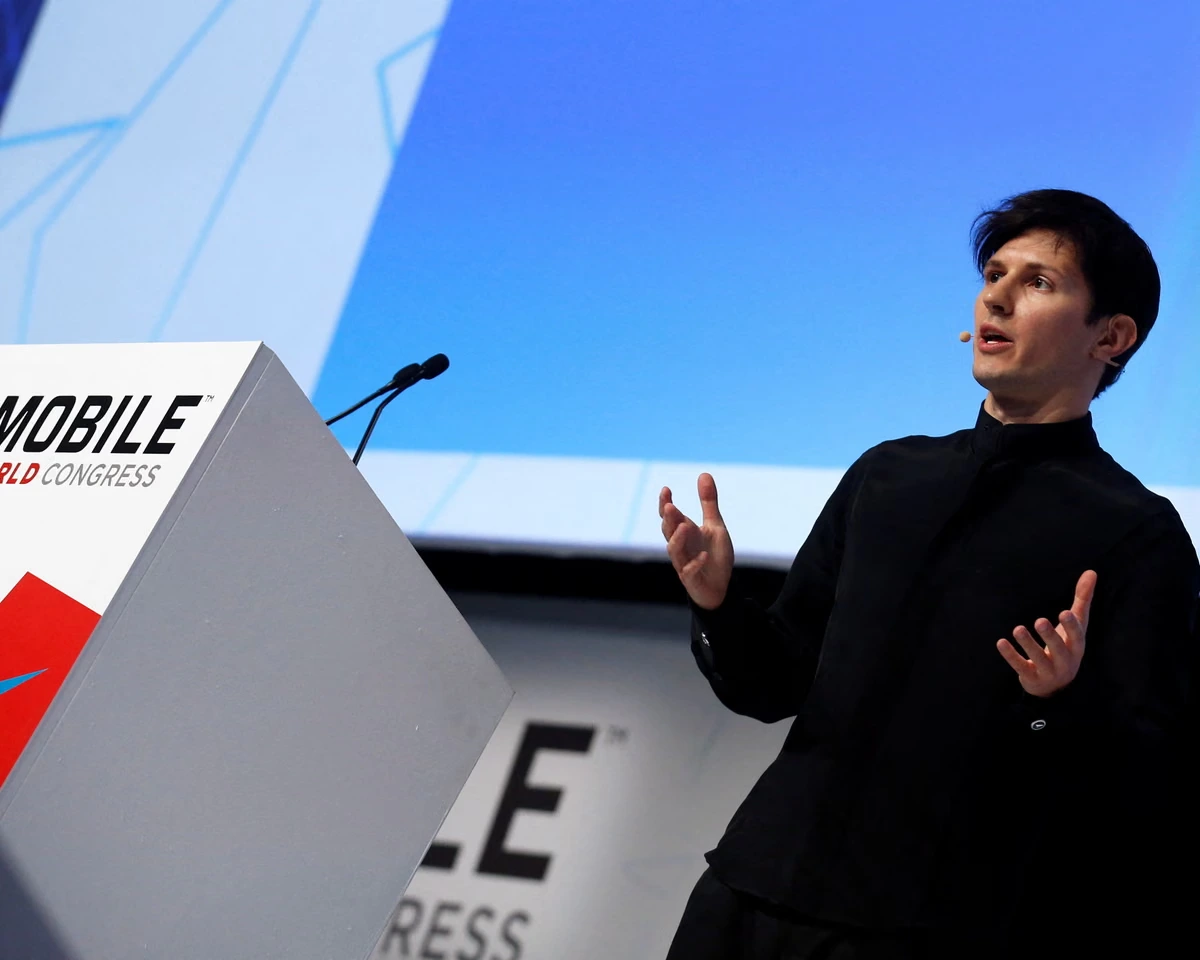
Russian officials have charged Pavel Durov, the founder and chief executive of the messaging app Telegram, with aiding terrorism.
The charges against the 41-year-old Russian-born billionaire, who lives in the Gulf, are the latest step by the Kremlin to bring the internet and digital communications under its control after the full-scale invasion of Ukraine in 2022.
The Federal Security Service said in a statement on Wednesday it had accused Telegram of failing to remove “numerous channels, chats and bots” allegedly used by “Ukrainian intelligence agencies, terrorist and extremist organizations to prepare and coordinate acts of sabotage and terrorism, mass murder, and cyber fraud” in Russia.
The FSB said Kyiv was using a dating chatbot on Telegram to lure and recruit Russians for “sabotage and terrorist activities” and it had detained 46 users, aged from 12 to 22, for assaulting law enforcement officers, arson and other acts over the past year.
The agency said it was adding Durov’s name to international wanted lists.
Durov said earlier this year that Russian officials had opened a criminal investigation against him and he accused them of fabricating pretexts to restrict access to Telegram and “suppress the right to privacy and free speech”.
If brought to trial and convicted, he could face life in prison.
Telegram, which boasts more than 1 billion users worldwide, did not respond to a request for comment. Its official website links to an account on X that on Wednesday posted an image of Durov raising a middle finger to the camera.
The website says the company is based in Dubai and that Durov, who holds dual citizenship of France and the United Arab Emirates, lives there too.
Under Vladimir Putin, Russian authorities have banned websites and platforms that do not comply with tight restrictions. They have also developed technology to monitor and manipulate online traffic.
Facebook, Instagram and X have been banned in Russia and YouTube has been throttled. Popular messaging apps, such as Signal and Viber, have been blocked, and the most popular ones – WhatsApp and Telegram – have been restricted.
VKontakte, a popular social media platform founded by Durov well before he launched Telegram, has come under the control of Kremlin-friendly companies. Russia tried to block Telegram between 2018 and 2020 but failed.
It is possible to circumvent some Kremlin restrictions by using virtual private networks but many of these VPNs are now being blocked.
Moscow is promoting what it calls a “national” messaging app known as Max, which critics say could be used for surveillance. The platform is touted as a one-stop shop for messaging, government services, payments and other activities. It openly says it will share user data with authorities upon request and experts say it does not use end-to-end encryption.
Activists in multiple regions tried to organise protests against the restrictions on Telegram but the authorities crushed nearly all their attempts.
Military bloggers have also denounced the crackdown, arguing that Telegram is an indispensable communications tool for Russian troops in Ukraine and for activists running crowdfunding campaigns to help Moscow’s forces.
The government initially promised not to restrict Telegram on the battlefield but a different message later emerged from the Kremlin. At a meeting with Putin for International Women’s Day, a servicewoman called Telegram an “adversarial tool” and agreed with the president when he said “the use of communications systems that are not ours, not under our control, poses a danger to personnel” in battle.
Despite the restrictions, multiple Russian officials still use Telegram and regularly update their “channels” – its term for blogs – on the platform. The Kremlin’s Telegram page had more than 284,000 followers as of Wednesday.
Durov was arrested in Paris in 2024 amid allegations that his platform was being used for illicit activity, including drug trafficking and the distribution of images of child sexual abuse. French authorities handed him preliminary charges for allegedly allowing criminal activity on the platform. In March last year, Durov said he had returned to Dubai after spending “several months” in France.
The Kremlin criticised the French authorities for moving against Durov. Putin’s spokesperson, Dmitry Peskov, said at the time that “yes, indeed, terrorists use Telegram. But terrorists also use cars. Why aren’t they arresting the CEO of Renault or Citroën?”
Peskov did not respond to a request for comment on what had made the Russian authorities change their position.
Prosecutors in Paris told Associated Press on Wednesday that Durov remained under formal investigation, facing an array of potential charges for alleged criminal activities linked to Telegram. Investigators have questioned him repeatedly, most recently this month.
Russia has faced accusations of using Telegram to coordinate and recruit people to carry out acts of arson and sabotage in Ukraine and across Europe. A British man was recruited on the platform, probably by Russian military intelligence, to organise a plot in 2024 to set fire to a warehouse in London containing satellite equipment for Ukraine. He was also asked to kidnap a pro-Ukraine Russian billionaire living in London.
Dutch teenagers were arrested in the Netherlands in September after being contacted by Russian hackers on Telegram who wanted them to map wifi networks in The Hague. The city is the location of many sensitive organisations, including the international criminal court, which has issued an arrest warrant for Putin, as well as the Organisation for the Prohibition of Chemical Weapons and Europol, which helps European countries fight international crime.
Moscow has denied involvement in acts of sabotage in Europe.